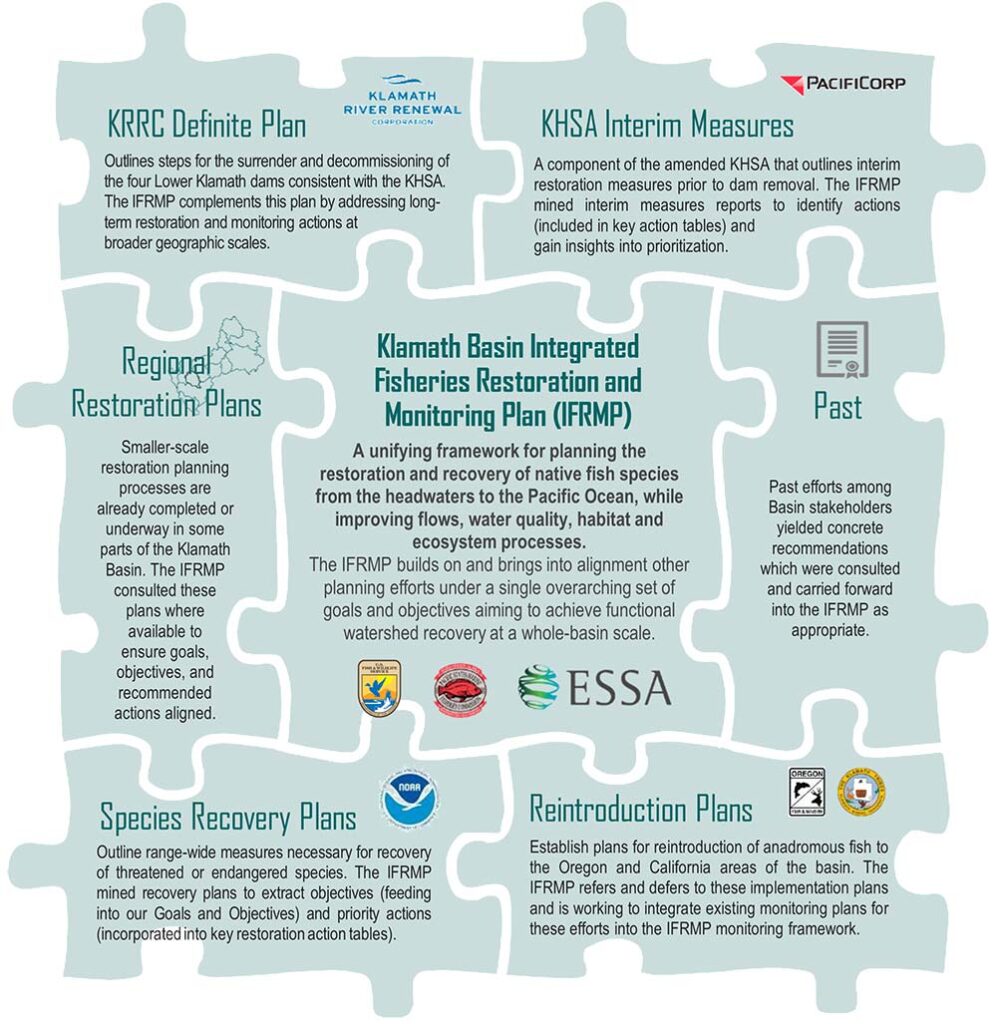
The IFRMP is the culmination of a multi-year collaborative planning process beginning in 2016 spanning six phases. Throughout this extensive effort, the planning team worked closely with more than 100 partners from federal agencies, state governments, tribal nations and local organizations—all committed to improving fishery restoration practices in the Klamath Basin. This collaboration took many forms, including building on and bringing together existing planning efforts, one-on-one interviews, webinars, workshops, surveys, and numerous rounds of iterative review and collaborative feedback on draft materials.
Timeline
Phase 1: Foundation Setting
Initiated by U.S. Fish and Wildlife Service
Gathered and synthesized information
Established partnerships and basic framework
Phase 2: Framework Development
Finalized Klamath Basin Synthesis Report
The Synthesis Report lays the groundwork for the Plan by distilling relevant past and current information about stressors on focal fish populations, habitat conditions and the restoration actions that are being pursued to improve natural ecological processes and bring lasting resilience to the ecosystem.
Clarified objectives, frameworks and conceptual models
Developed first draft of the Klamath Basin IFRMP
Phase 3: Prioritization Method Creation
Conducted extensive stakeholder engagement through Sub-Basin Working Groups
Created and tested multi-criteria scoring prioritization method
Developed web-based Klamath Basin IFRMP Restoration Prioritization Tool
Phase 4: Implementation Support
Created monitoring plan recommendations to close key gaps in tracking basin-wide recovery efforts
Reviewed IFRMP alignment with other regional restoration plans
Improved usability of the Restoration Prioritization Tool
Phase 5: Finalization
Finalized IFRMP document
Created 2023-2024 Restoration Action Agenda (RAA)
Developed recommendations for ongoing IFRMP implementation