The IFRMP identified critical monitoring needs and developed three monitoring approaches to efficiently track basin-wide recovery over time. These approaches monitor multiple Core Performance Indicators (CPIs) at the same locations, reducing costs while providing comprehensive information on restoration progress.
Critical Monitoring Needs
Standardized data collection and management
Coarse basin-wide approaches (e.g., repeat bathymetric LiDAR) to support system-wide assessments of multiple CPIs
Event-driven monitoring (i.e., real-time data) to understand relationship between significant precipitation events and CPIs
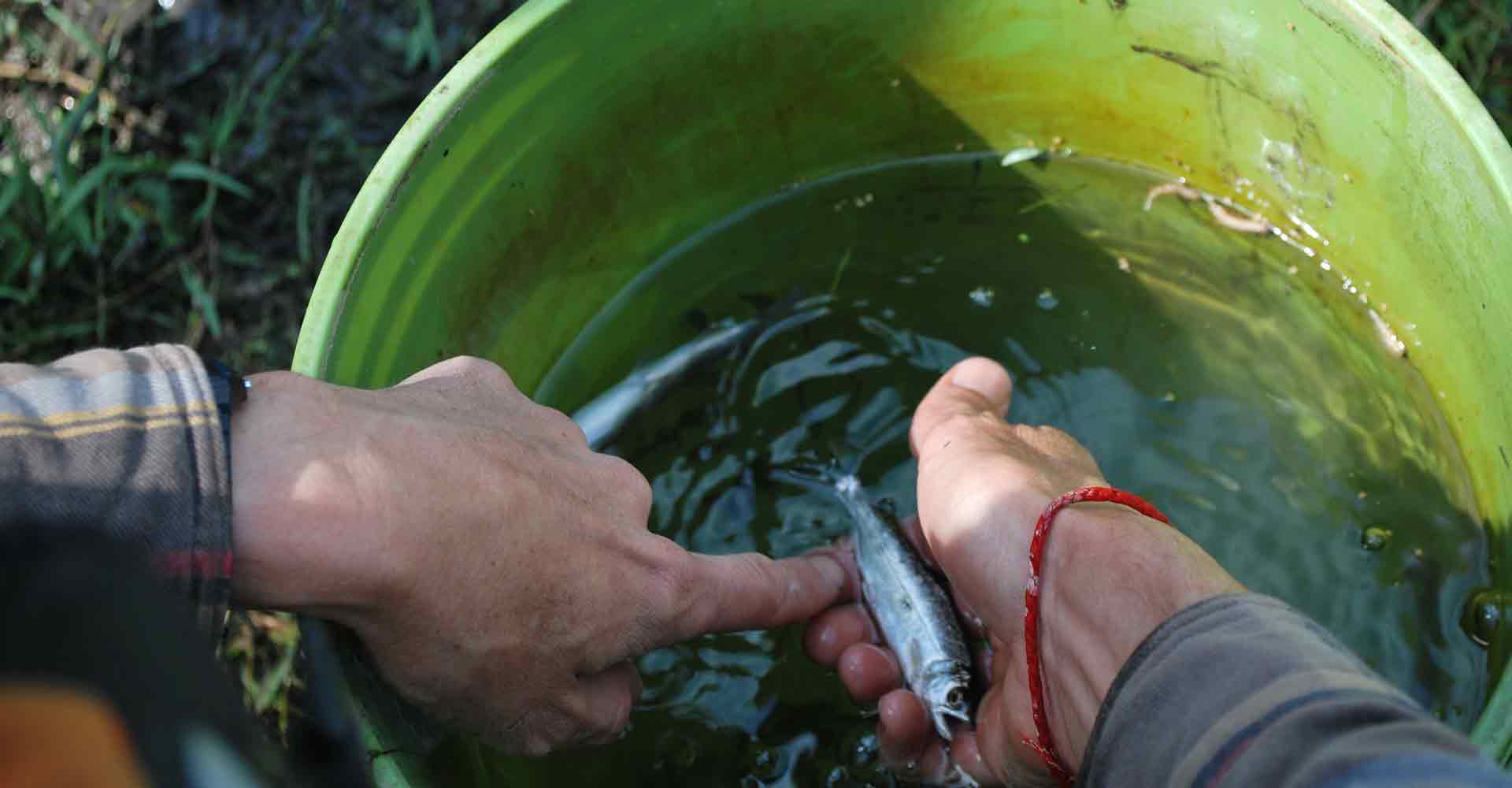
Photo: Fish sampling
Monitoring Approaches
Approach A: Basin-wide Census
Example methods: LiDAR, Thermal Infrared
Location: Entire stream network
Purpose: System-wide landscape assessment
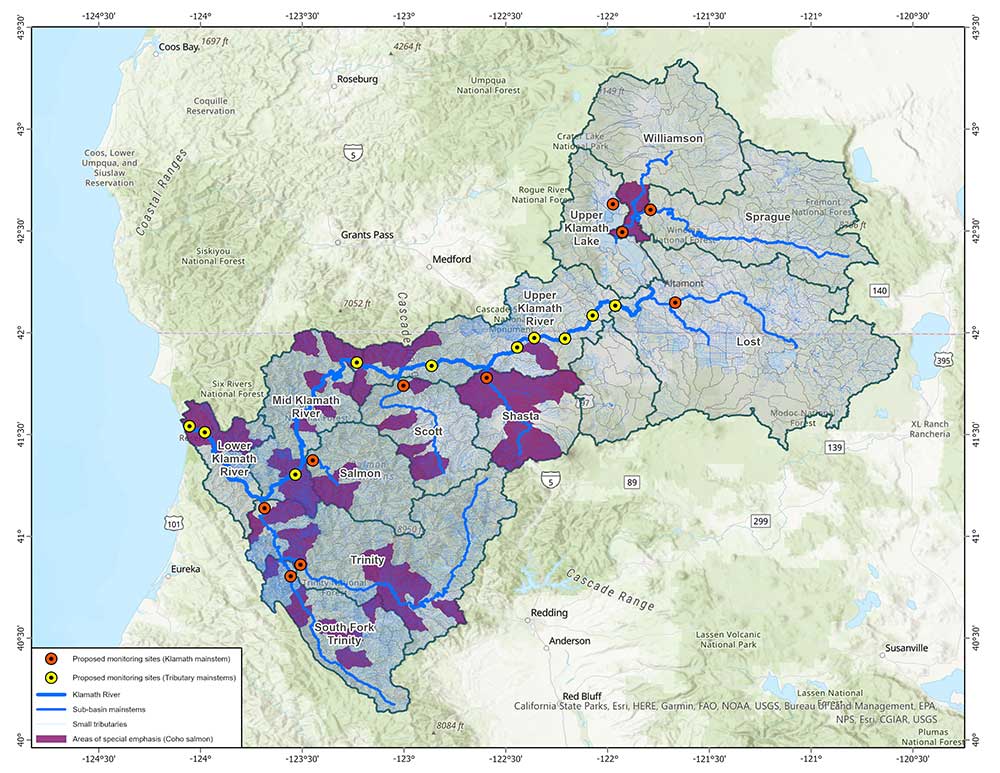
Approach B: Point Locations
Example methods: Water quality sampling, environmental DNA
Location: Mainstem Klamath River and major sub-basin confluences
Purpose: Strategically selected location assessments to inform basin-wide conditions
Approach C: CPI-Specific Stratification
Example methods: Targeted monitoring based on specific CPI needs
Location: Key refugia, special emphasis areas, tributaries, high agricultural pressure zones
Purpose: Specialized assessments
IFRMP Monitoring Recommendation
Each of the IFRMP objectives (described in the IFRMP Plan document) are linked to associated core performance indicators (CPIs) that will be monitored across the Klamath Basin to track and communicate progress towards basin-wide recovery. Subject-area experts evaluated existing monitoring strategies and made recommendations as to where/how the IFRMP could best supplement the existing monitoring to improve assessments of CPI status and trends. Several crosscutting monitoring needs emerged, including:
Need for improved standardization of data collection and storage.
Need for coarse basin-wide approaches to support system-wide assessments of multiple CPIs (e.g., repeat bathymetric LiDAR over time).
Need for event driven monitoring (i.e., real-time data) to understand the relationship between significant precipitation events and CPIs.