The vision of the Klamath Basin IFRMP is to provide a unifying framework for planning the coordinated restoration and recovery of native fish species from the headwaters to the Pacific Ocean, while improving flows, water quality, habitat and ecosystem processes.
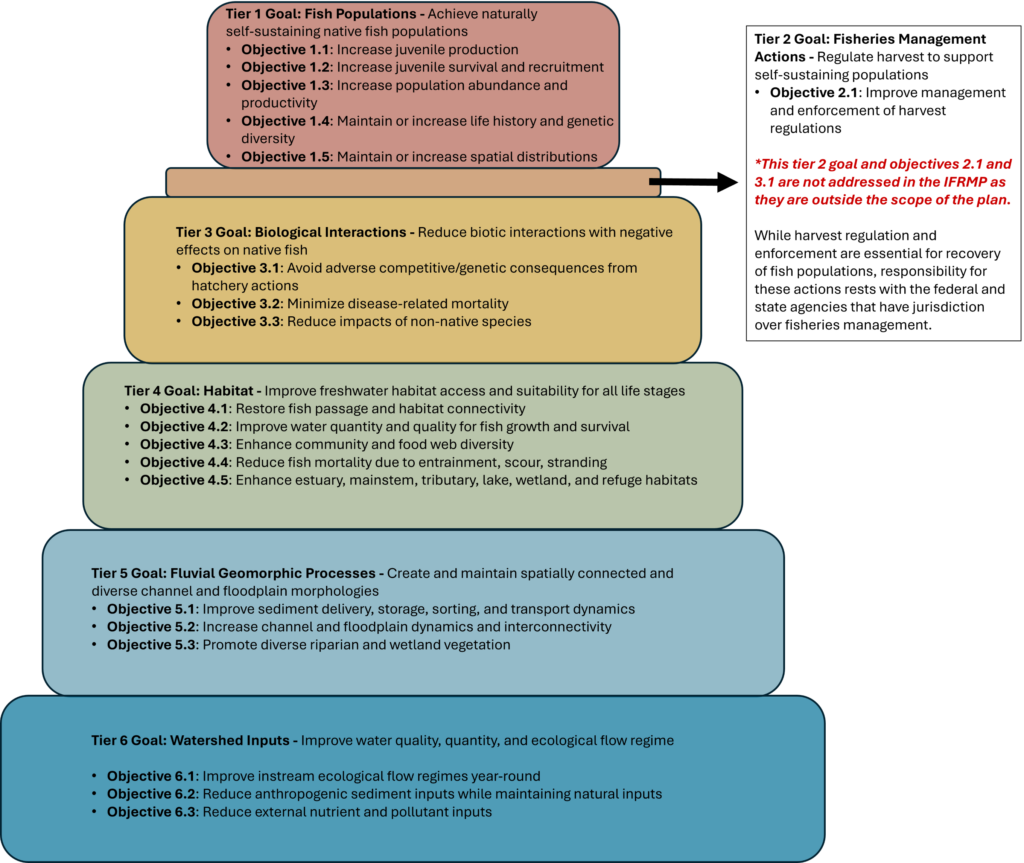
The IFRMP uses a tiered restoration approach that addresses the root causes of ecosystem degradation by targeting fundamental watershed processes rather than treating symptoms at individual sites. This method recognizes that watersheds function hierarchically—improvements to broad-scale hydrogeomorphic and biogeochemical processes at the foundation level cascade upward to benefit more localized channel, habitat, and population processes at higher tiers. By carefully considering how each tier builds upon the previous one, this approach maximizes the potential benefits of restoration actions across the entire watershed.
To determine how well restoration efforts are working to restore ecological function, the plan established defined goals, objectives, and indicators for tracking progress toward the desired system state. Restoration goals are statements of broad outcomes to be achieved, while restoration objectives are specific and measurable tasks that must be completed to make the related goal achievable.