Restoration Priorities
Restoration Prioritization Tool
The restoration prioritization tool is a systematic, web-based tool that addresses the fundamental question: “Given all that we currently know, which habitat restoration actions will provide the broadest possible benefits to multiple native Klamath Basin fish species within each sub-basin and throughout the Basin?” The tool applies a multi-criteria scoring framework based on six key questions to ask when considering any restoration project concept—questions about fish presence, watershed impairment, stressor coverage, benefit scope, implementation feasibility, and relative importance. Prioritization scores and ranks reflect the suggested order of projects to meet the overarching goal of obtaining the greatest benefits across the most focal species and stressors across a given sub-basin. They do not reflect the overall importance or validity of a proposed project, and a lower prioritization score does not mean a project should be disregarded.
Six Key Prioritization Questions
Criterion 1: Are focal fish present where the project is proposed?
Criterion 2: How impaired is the watershed (how much is restoration needed)?
Criterion 3: How many stressors will this project address?
Criterion 4: How far and wide will project benefits be felt?
Criterion 5: Is it feasible to implement this project in this place?
Criterion 6: How much do we care about the answers to each question?
Tool Features
- Web-based Interface: Interactive mapping and data visualization
- Real-time Scoring: Immediate prioritization results based on user inputs
- Scenario Testing: Ability to test different prioritization scenarios (i.e., adjust weights for different criteria, watershed process tiers, and species) to reflect changing restoration goals, objectives and funding contexts
- Transparency: Clear documentation of scoring rationale
- Adaptability: Can be updated as scenarios change

Recommended Restoration Priorities
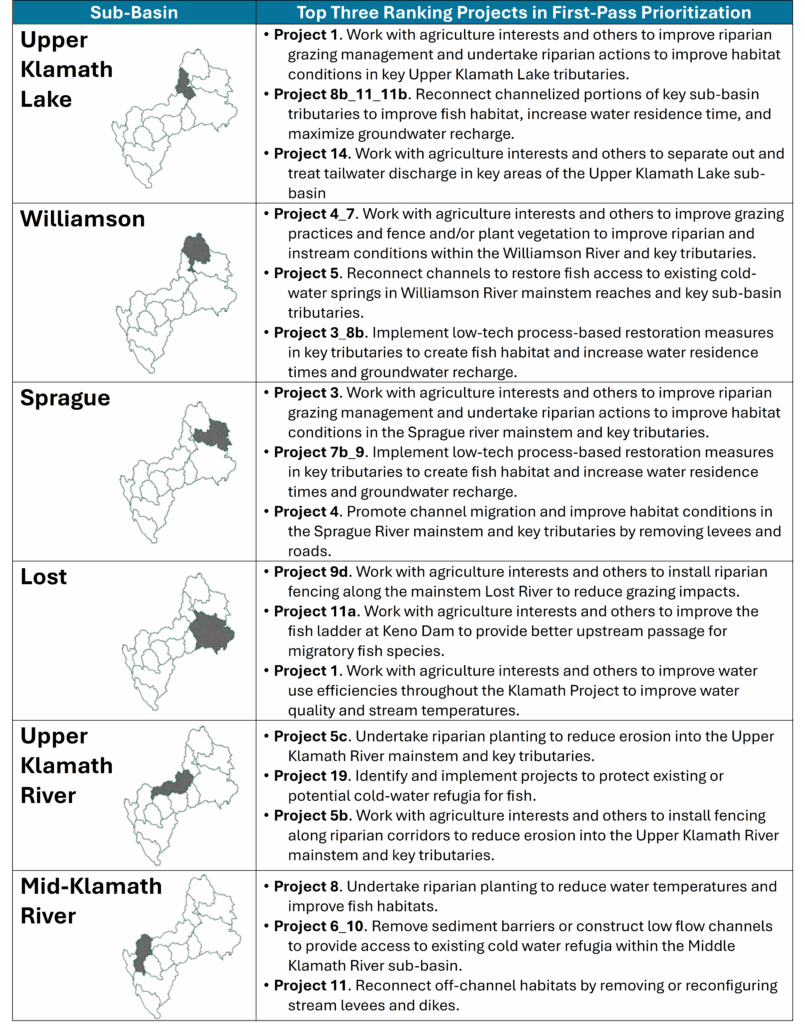
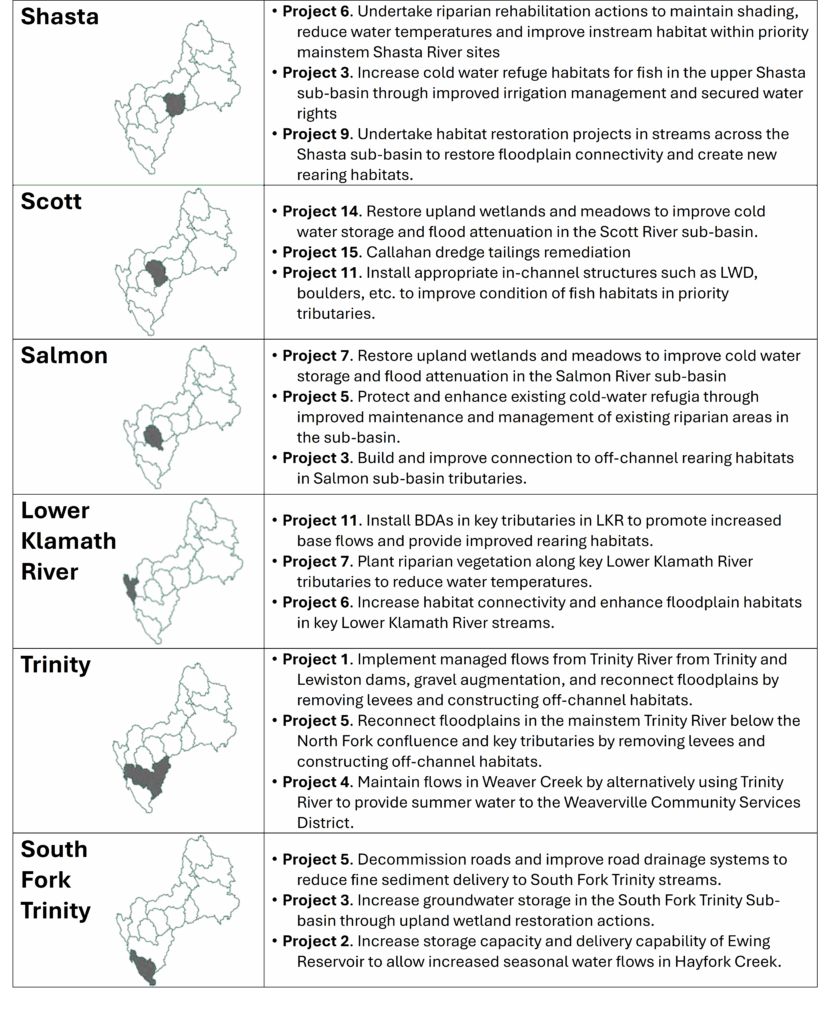
The Restoration Prioritization Tool was used to identify the top three priority projects per sub-basin by ranking 146 restoration project concepts (IFRMP sections 4.3-4.5) gathered from prior plans, expert recommendations, and decades of research. These priority projects provide a scientific foundation for collaborative discussions and decision-making rather than provide definitive project requirements. The prioritization tool can also evaluate other restoration projects that managers may consider.
The table below documents a snapshot of the top three projects within each sub-basin. Note that ordering of sub-basins does not reflect any kind of priority of sub-basins themselves (which has not been assessed in the IFRMP) and that restoration actions identified below do not constitute an official federal agency position or obligation for current or future action, or funding. Project numbers match detailed project descriptions provided within each sub-basin section found in IFRMP sections 4.3-4.5.